
Why Are Polyphenols Important for Gut Health?

Last Updated: November 4, 2026
Quick Summary
Polyphenols gut health benefits come from plant compounds that mostly survive digestion and reach your colon, where gut bacteria convert them into bio-active metabolites your body can use. These metabolites strengthen your intestinal barrier, support microbiome diversity and selectively feed beneficial microbes. Consistent intake from varied plant foods matters more than occasional large doses.
Your body absorbs only a small fraction of the polyphenols you eat, so most reach your colon intact.
Polyphenols help correct microbial imbalance first, and barrier benefits follow.
Aim for variety across colors and plant families rather than large amounts of one plant.
Increase polyphenol and fiber intake gradually over three to four weeks to avoid gas and bloating.
Pair green tea with lemon, since vitamin C supports catechin absorption.
Table of Contents
What Polyphenols Do Inside Your Digestive Tract
Polyphenols gut health benefits begin with plant compounds that survive digestion long enough to feed and reshape the bacteria living in your colon. Most people assume antioxidants neutralize free radicals and that's the end of the story. That's the smallest part of what happens.
Here's the part most guides get wrong: your body absorbs only a small fraction of the polyphenols you eat. The rest travel intact to your large intestine, where gut bacteria break them into smaller metabolites your body can actually use. Those metabolites do the real work.
How Your Gut Bacteria Transform Polyphenols
Polyphenols are poorly absorbed in the small intestine, so the majority reach the colon where microbial metabolism converts them into bio-active compounds. This is why the gut microbiota sits at the center of polyphenol research.
Bacteria use enzymatic degradation to strip polyphenols into simpler phenolic compounds. Those metabolites then enter circulation and influence everything from oxidative stress to systemic inflammation. Without a healthy microbial community, much of this conversion never happens.
A common mistake is treating polyphenols as a direct antioxidant supplement. In practice, they function more like a substrate your microbes ferment.
How Polyphenols Strengthen Your Intestinal Barrier
Polyphenols gut health support includes reducing intestinal permeability and calming pro-inflammatory cytokines at the epithelial surface. A tighter barrier means fewer bacterial fragments leak into circulation. By limiting inflammatory signals that can escape the gut barrier, polyphenols may also connect intestinal protection with polyphenols and heart health.
Researchers describe this as improved gut homeostasis. In plain terms, the junctions between your intestinal cells stay closed, and the mucus layer that protects them stays intact. Compounds in berries, cocoa, and green tea appear to support this barrier function directly.
What most people miss is the sequence. Barrier damage often starts with dysbiosis, a microbial imbalance that lets pathogenic bacteria gain a foothold. Polyphenols help correct that imbalance first, and the barrier benefits follow.
According to research reviews on dietary polyphenols and gut barrier function, these effects depend on consistent dietary intake rather than occasional large doses.
A Practical Polyphenol Rich Foods List for Daily Eating
Any useful polyphenol rich foods list starts with variety rather than volume. Different compounds feed different microbes, so rotation matters more than eating the same "superfood" every day.
Build your week around these:
Berries: blueberries, blackberries, raspberries, and strawberries
Dark chocolate: 70% cacao or higher
Red grapes and pomegranate: rich in flavonoids and tannins
Green tea: a steady source of catechins
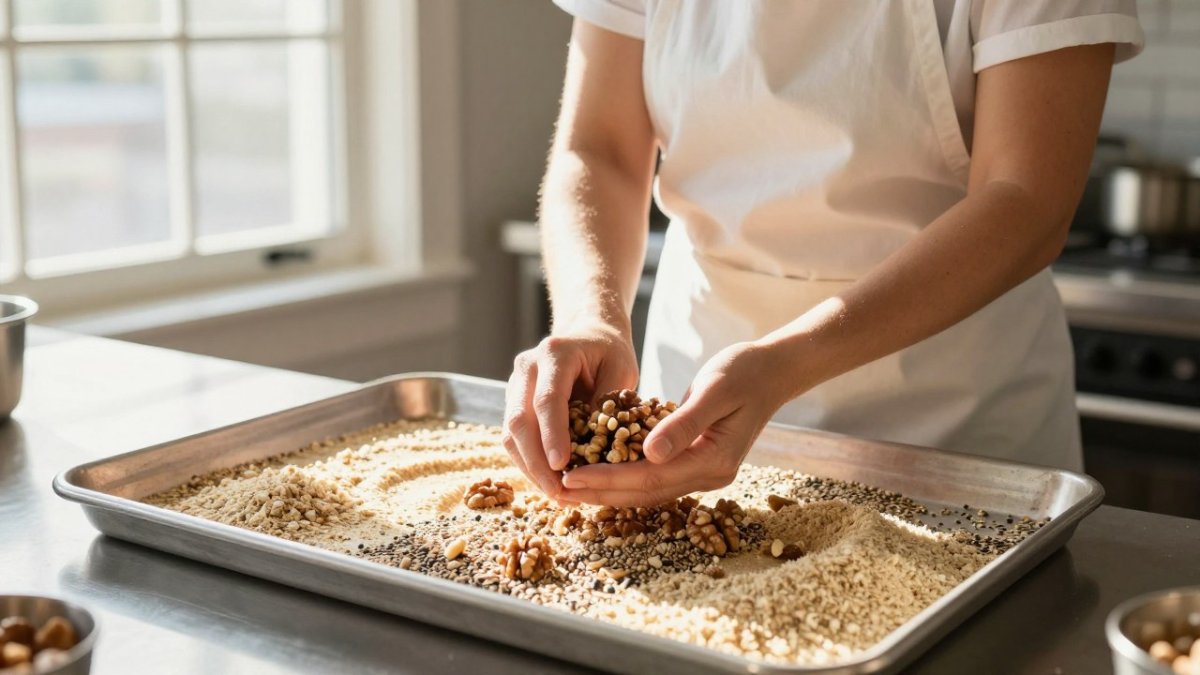
Walnuts and flaxseed: polyphenols plus fiber
Olive oil and dark leafy greens: everyday phenolic compounds

For readers who want to go deeper, this gut-health food guide covers texture-friendly options, and our polyphenol foods breakdown explains antioxidants and why plant compounds belong in a daily routine.
How to Increase Gut Microbiome Diversity with Plant Compounds
The fastest route to microbiome diversity is eating a wider range of plants, not a larger quantity of any one plant. Each plant brings different phenolic compounds that feed different beneficial microbes.
Aim for variety across colors and plant families. Herbs, spices, seeds, and teas count too. Fermentation adds another layer: fermented foods introduce live cultures that help metabolize what you eat.
If you're building this into a demanding schedule, this gut health routine for busy professionals shows how to make diversity practical rather than aspirational.
Watch out: jumping from almost no fiber to a very high-polyphenol diet in one week often causes gas and bloating. Increase gradually over three to four weeks.
Prebiotic Foods for Gut Health That Work with Polyphenols
Prebiotic foods for gut health feed beneficial microbes, and polyphenols work best alongside them. Fiber and plant compounds are a partnership, not competing strategies.
Strong pairings include onions, garlic, leeks, asparagus, oats, and bananas. These supply fermentable fiber that microbes convert into short-chain fatty acids, which in turn support the gut-brain axis and metabolic health.
What most guides miss is that polyphenols have their own prebiotic effect. They selectively encourage beneficial microbes while suppressing pathogenic bacteria. Combine both food groups at the same meal and the effect compounds.
Polyphenol Stacking: Simple Combos That Boost Absorption
Polyphenol stacking means pairing compounds that improve each other's bioavailability. It's the practical answer to the absorption problem most articles skip.
Try these combinations:
Combo | Why It Works |
Green tea + lemon | Vitamin C supports catechin absorption |
Dark chocolate + berries | Complementary flavonoids, shared microbial targets |
Pomegranate + walnuts | Ellagitannins plus healthy fats for absorption |
Turmeric + black pepper | Piperine improves curcumin uptake |
These are simple to build into breakfast or an afternoon snack. Stacking doesn't require supplements or precision, just deliberate pairing.
Most guides stop at the pairing list. The useful part is turning those pairs into actual meals, because timing and food matrix affect how much you absorb. Here are three concrete stacks built around a normal day:
Morning: steel-cut oats topped with blueberries and a spoon of ground flaxseed, alongside green tea with a squeeze of lemon. The fiber feeds butyrate producers, the berries supply anthocyanins, and the lemon's vitamin C supports catechin stability in the tea.
Afternoon: a square of 70% dark chocolate with a small handful of walnuts and a few pomegranate arils. The healthy fats from the walnuts slow gastric emptying and give the ellagitannins from the pomegranate more time to be converted in the colon.
Dinner: a bowl of lentils or chickpeas with sautéed onions and garlic, drizzled with olive oil and finished with black pepper and a pinch of turmeric. This pairs prebiotic fiber with phenolic compounds and uses piperine to improve curcumin uptake.
A few practical rules make stacking work. Keep the pairing at the same meal rather than hours apart, since the compounds need to be present together. Favor whole foods over extracts, because the food matrix supplies fiber and cofactors that concentrated powders lack. And rotate your stacks across the week rather than repeating one, since different polyphenol families feed different microbes.
Watch out: stacking several high-dose polyphenol supplements at once is not the same as stacking foods, and concentrated extracts can interact with medications in ways whole foods rarely do.
If you want to go deeper on the food side, our polyphenol foods breakdown explains which plant compounds belong in a daily routine, and this gut-health food guide covers texture-friendly options for sensitive digestion.
Who Should Be Careful with High-Polyphenol Diets
A few groups should proceed with care. People with iron-deficiency anemia should ask their clinician whether to separate high-polyphenol foods from iron-rich meals.
Anyone taking blood thinners should talk to their clinician before changing their diet. People with sensitive digestion may need to build up slowly.
If you're weighing supplements rather than food, this science-based answer on polyphenol supplements covers safety and whether they're worth it.
Watch out: high-dose polyphenol supplements are not the same as food. Check with your doctor before combining concentrated supplements with medications.
Choosing a Polyphenol-Rich Snack That Fits Your Day
The best polyphenol snack is the one you'll actually eat consistently, and convenience decides that more often than nutrition labels. Between meetings, most people reach for whatever is within arm's reach.
Pranam Bars offers 100% plant-based, organic, and gluten-free nutrition bars, crafted in small batches and formulated by a neuroscientist.
If you're ready to try one, you can browse the pomegranate bar and see what fits your routine.
Frequently Asked Questions
Do polyphenols act as prebiotics in the gut?
They act in a prebiotic-like way, though not all meet the strict definition. Most polyphenols reach the colon intact because your small intestine absorbs only a fraction. Once there, gut bacteria break them down into smaller metabolites that feed beneficial microbes and support microbiome diversity. This prebiotic effect is one reason polyphenol-rich foods matter for gut health. Pairing them with fiber-rich prebiotic foods for gut health, like onions, garlic, and oats, gives your microbes a broader fuel mix.
Which foods are highest in polyphenols for gut health?
A practical polyphenol rich foods list starts with berries, especially blueberries and blackberries, plus dark chocolate at 70% cacao or higher, red grapes, green tea, coffee, walnuts, flaxseed, and extra virgin olive oil. Cloves and dried herbs rank high too, though you eat them in small amounts. Aim for variety across colors and plant types rather than relying on one food. A handful of berries plus a square of dark chocolate covers a solid range of phenolic compounds in one sitting.
Are there side effects to consuming too many polyphenols?
Yes, in some situations. High doses of concentrated supplements can cause digestive upset, and People taking blood thinners should talk to their doctor before adding large amounts of polyphenol supplements, since some compounds affect clotting. Food sources are generally safe in normal amounts. If you notice bloating or stomach discomfort after increasing intake, scale back and build up gradually.
Can a polyphenol-rich diet improve digestive symptoms?
It may help with some symptoms, particularly those linked to low-grade inflammation and dysbiosis. Results vary by person, and research on individualized response is still developing. Keep a simple log of what you eat and how you feel for two to three weeks. That record tells you more about your own response than any general guideline, and it helps you spot which foods work for you.
Most people know they should eat more plants but never build the habit, because the healthy option is the inconvenient one. Pranam Bars closes that gap with 100% plant-based, organic, gluten-free bars formulated to be high in polyphenols, made in small batches, and built for real workdays. Get started with Pranam Bars and give your gut a snack that actually earns its place in your bag.


Comments